
Hold on kids, we're moving rooms! Want to get a child excited about moving up a grade? Tell them they have a whole separate classroom for science; and, one for Spanish; and, go ahead, pick an instrument or sing out loud in the choir. Maybe run for the student council! More choices begin for students in the fourth and fifth grades, as do added responsibilities. Not to worry, with their burgeoning skills as explorers, problem solvers, and inquisitors, these students are ready to get their hands dirty. Whether they're designing a tiny house to scale including all of the prerequisites (like furniture and a bathroom), or planting and composting in the garden with the promise of a harvest taste-test later, these capable adventurers may take their subjects seriously, but they also take them with an unrelenting zeal. (It also helps that their teachers feel the same way!)
The Fourth Grade
It may not sound like a big deal to adults who seem always to be at the mercy of their ability to multitask, but for a fourth grader, juggling multiple demands can be a foreign concept. Students in this grade are preparing for the increased independence and responsibility that awaits them in their upper grades. They are handed their first day planner. They walk to a different classroom for certain subjects. They present their first research topic via PowerPoint in front of classmates and family members in the auditorium at the end of the year. They are given the option of selecting band or chorus for their music requirement. It's an exciting time as they start to move into their roles as "big kids" in the Lower School, but it can be a lot to juggle. It's a good thing our teachers love what they do, because they have become experts at expecting more from our fourth graders while at the same time boosting their confidence as they navigate their newfound independence—and hallways.
The Classroom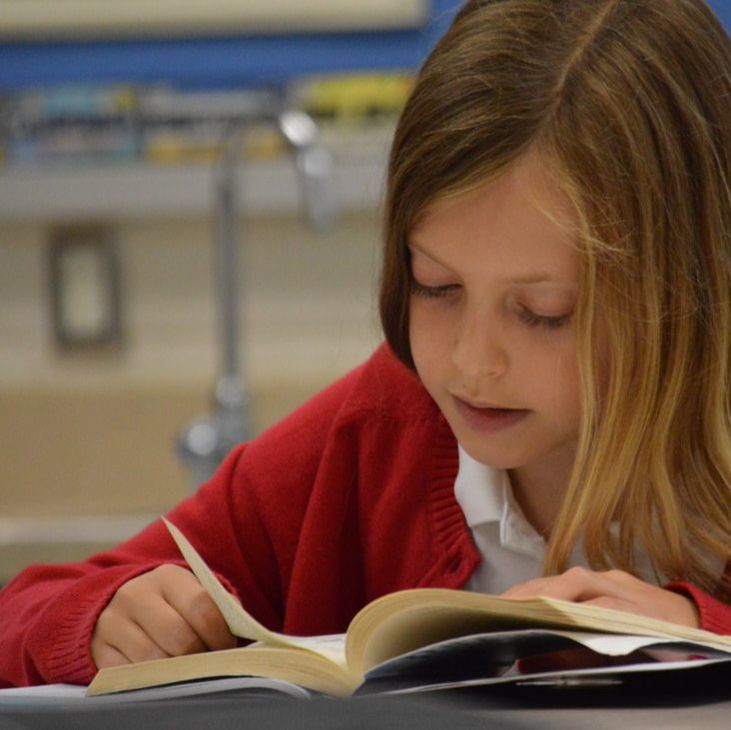
Fourth grade students learn to express in writing what they have learned across the curriculum. Therefore, writing is an integral part of each academic area. A team of teachers instructs the core courses of math, science, language arts, and social studies. Organization and study skills are emphasized and taught in all subject areas. Highlights of the fourth grade include an overnight trip to Williamsburg, a PowerPoint project that is presented to parents, and more freedom in their class choices.
Physical Education remains a part of daily life for the Fourth Grade, as does Spanish, where they explore their creativity and speaking skills with skits they present to family members entirely in Spanish. |
The More
Making more of a book than what is presented on the page takes many forms in these later years in Lower School. Our 100 Books program encourages out-of-school reading of books aimed at expanding a child's (and family's) exposure to a wide variety of literary types and topics. If completed by the end of the fifth grade, a student receives a special certificate and a gift from our librarian.
At the end of the year, after weeks of research sessions in the Library with our librarian, and a crash-course in the use of PowerPoint, each fourth-grade student will deliver a presentation in Fishburn Auditorium. The project provides students the opportunity to research, analyze, write, and present on a singular topic and continues the North Cross belief in the benefits of public speaking.
Students choose to participate in either Beginning Band, an introduction to woodwind and brass instruments, or in the Lower School Chorus, which highlights music theory and sight-singing skills. In weekly Visual Arts classes, students study different techniques and artists' styles, working in different media throughout the year. |
Sample Day7:50 Arrive
7:55 Spanish 8:35 Language Arts/Social Studies or Math/Science 10:30 P.E. 11:10 Lunch 11:45 Recess 12:05 Math/Science or Language Arts/Social Studies 2:00 Art/Library/Flex Time 2:50 Dismissal |


The Fifth Grade
Getting a point taken off because you forgot to put a check mark next to a correctly spelled Word Study word may seem like a strange way to teach a student to pay attention to detail, but it works. Students in the fifth grade are being primed for their entry into Middle School the following year where students become their own proofreaders and organizers. A fifth-grade teacher at North Cross doesn't remind her students to bring their planners home at the end of the day. Our students quickly learn to be their own keepers. During their last year in the Lower School, fifth-grade students become prepared for the world of independent study by honing their research skills, organization, and where to put that blasted apostrophe mark.
BELOW: Watch highlights of the fifth grade!
The Classroom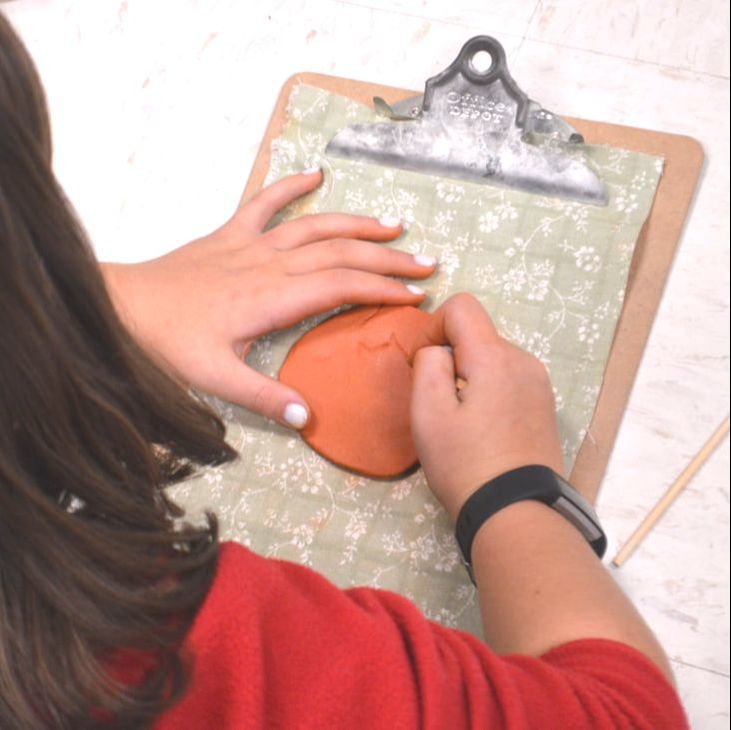
It may sound odd, but the best word with which to describe a fifth grader at North Cross is 'storyteller.' This is so because everything they learn, from coding to ancient civilizations, is brought to life through stories. The study of early humans begins the first few months of a fifth-grader's history curriculum. But their work starts well before the school year. The required summer reading selection for rising fifth graders is Boy in the Painted Cave by Justin F. Denzel. Though not a history textbook, it brings to life the time in which fifth-graders will spend their first weeks of school—the Cro-Magnum era.
There are many lessons that are illustrated through classroom activities. Whether it be solving a word problem that will help choose the correct ingredients for a fraction 'pizza,' or performing a controlled science experiment and charting the results for a poster presentation, our teachers have found numerous ways to teach to mastery, not to the test, by bringing subject matter to life. It's one thing to have a student memorize facts about an Ancient Egyptian God, but it's entirely another to have him research and present his biography (as the God himself) to their class. Go ahead, ask a fifth-grader what the first written word looked like, they can draw it for you. They've done it before—in clay. |
The More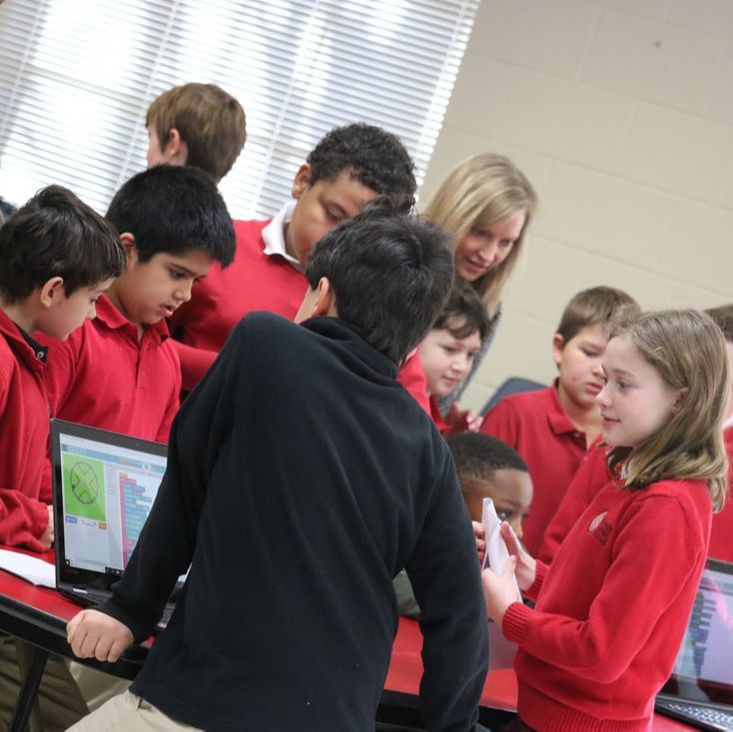
Math teacher Kate Clark remarked recently that her students asked, "Mrs. Clark, when are we going to start doing Algebra?" She replied, "You already are." Students are entering their final year of Singapore Math, a program which emphasizes not just the 'how' of math, but the 'why,' understanding the solution by visualizing numbers as 'moveable parts.' Sound like Algebra? (2x + 2) + x = 632 used to be something a student couldn't comprehend until 6th or 7th grade. Using word problems and bar models that represent the different quantities, students can visualize the different parts of the problem so that figuring out how to solve it becomes, well, elementary.
How much information can you fit on an index card? What if the only information you could put on it is that which might actually help you in an open-note test? Now, decide what needs to go on that one card, organize the information so that it's easy to find, and transcribe it in a way that makes sense to you. This is just one example of the study skills taught which help our students organize information so that they'll have the building blocks for future research papers and presentations.
|

Program of Study Guide
Sample Day7:50 Arrive
7:55 Spanish or Science/Math or Language Arts/Social Studies 8:35 Spanish or Science/Math or Language Arts/Social Studies 10:30 P.E. 11:10 Lunch 11:45 Recess 12:05 Math/Science or Language Arts/Social Studies 2:00 Computer Science or Art or Library or Band/Chorus 2:50 Dismissal |
Heard in the Halls
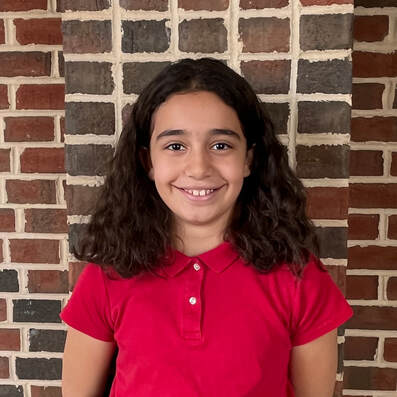
Salam '32
"The teachers are really nice at North Cross. Math and Science are my favorite subjects here because we get to do fun activities and experiments in class."